
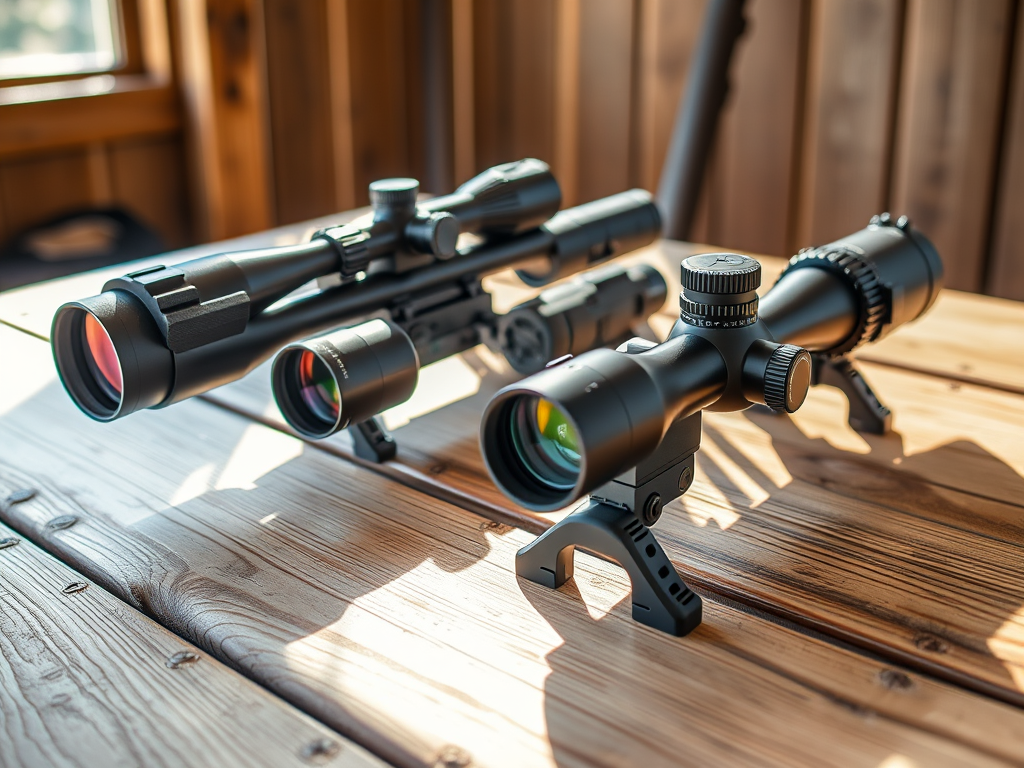
Whether you are a beginner in shooting or a veteran, choosing the right tactical scope doesn’t have to be intimidating. This entry-level tactical scopes comparison guide will help you compare the best entry‑level tactical scopes and make an informed choice based on real-world use.
While premium tactical optics can cost thousands, today’s entry‑level scopes deliver impressive performance for training, range shooting, and beginner long‑range applications. Additionally, they offer a perfect balance of affordability, durability, and essential features, accommodating users of different levels.
What Is an Entry‑Level Tactical Scope?
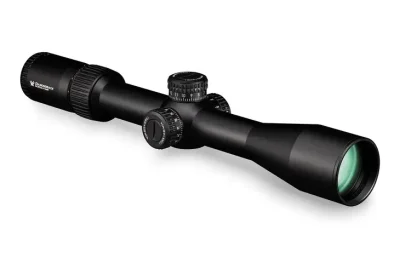
An entry‑level tactical scope is a budget‑friendly optic designed for shooters who want practical tactical features without the high cost of professional‑grade glass. These scopes typically include exposed turrets, tactical reticles, and durable construction suitable for AR‑15s, bolt‑action rifles, and .308 platforms. Additionally, they are built with versatility in mind for range training, basic precision shooting, and learning long‑range fundamentals.
See Top 10 Best Tactical Scopes for AR15
Intended Use and Shooting Applications
Before comparing specs, it’s important to understand how you intend to use the scope. Entry‑level tactical scopes are commonly used for target practice, rifle training courses, varmint hunting, and beginner competition shooting.
Furthermore, some models are optimized for AR‑style rifles with moderate engagement distances, while others are better suited for bolt‑action rifles reaching farther ranges. Matching the scope to your shooting style ensures better performance and value.
Specs to Consider when Choosing an Entry Level Scope
Here are the key specs to look at when buying an entry-level scope:
1. Magnification Range Comparison
Magnification is the first feature to look at. Entry‑level tactical scopes often fall into ranges such as 1–6x, 3–9x, or 4–16x.
Lower magnification ranges favor fast target acquisition and close‑to‑mid‑range shooting, making them ideal for AR‑15 platforms. On the other hand, higher magnification options support precision shooting at longer distances but may add weight and complexity. The best choice should balance clarity, usability, and realistic engagement distances.
2. Reticle Type and Design
Most entry‑level tactical scopes feature MIL‑based hash reticles or simplified BDC reticles. MIL reticles are popular for hunting because they allow for consistent holdovers and easier learning of ballistic fundamentals.
With design, reticle designs with clear sub-tensions help shooters make quick adjustments without visual clutter. When comparing scopes from different brands, prioritize reticles that are intuitive and easy to read at multiple magnification levels.
See 6 Best Zero-Retention Rifle Scopes
3. First Focal Plane vs Second Focal Plane
It is also important to consider reticle plane placement. In the entry‑level category, second focal plane (SFP) scopes are more common due to their lower cost. These reticles remain the same size regardless of magnification, meaning sub-tensions are accurate only at a specific power setting.
On the other hand, First focal plane (FFP) scopes scale the reticle with magnification, allowing accurate holdovers at any zoom level. While affordable FFP scopes are becoming more available, SFP models often provide better optical clarity at the same price point.
See First Focal Plane vs Second Focal Plane Scopes
4. Turret Quality and Adjustment System
Furthermore, reliable turret tracking is essential for tactical shooting. Entry‑level scopes typically use either MOA or MRAD adjustment systems, with MRAD becoming increasingly popular for its simplicity.
It is also important to compare turret click feel, reset capability, and consistency. Exposed turrets allow quick dialing, while capped turrets offer added protection for field use. Additionally, repeatability matters more than ultra‑fine adjustments at this price level.
See MOA vs MRAD Scope Adjustment Guide
5. Optical Clarity and Glass Performance
While entry‑level tactical scopes don’t match premium glass, many offer impressively good clarity for the cost. Look for scopes with fully multi‑coated lenses that provide decent brightness, contrast, and edge clarity.
When it comes to optical performance, the best entry-level scope should remain usable at higher magnifications without excessive distortion.
See German Glass Hunting Scopes Review
6. Build Quality and Durability
Durability is a defining feature in the entry-level tactical scopes comparison guide. Typically, these scopes are constructed from aircraft‑grade aluminum to maximize durability while keeping weight to a minimum. Additionally, the best entry-level scopes are shockproof, waterproof, and fog‑resistant for reliable use in different weather conditions.
Compare tube thickness, sealing quality, and recoil ratings. Additionally, a well‑built scope should hold zero under regular use and withstand rough handling at the range or in training environments.
7. Weight and Size Considerations
Next, weight affects rifle balance and handling, especially on AR platforms. Entry‑level tactical scopes vary widely in size, with higher magnification models tending to be heavier. Compact scopes improve maneuverability, while larger scopes may offer better adjustment range. Choose a size that complements your rifle setup without adding any unnecessary bulk.
8. Illuminated Reticle Features
Another important feature to look at is reticle illumination. Many entry‑level tactical scopes include illuminated reticles for improved visibility in low‑light conditions. Compare brightness levels, control placement, and battery life. The adjustable illumination at this price range is typically best suited for dawn, dusk, or indoor ranges rather than bright daylight use.
See Best Illuminated Reticle Hunting Scopes
9. Mounting Compatibility
Proper mounting improves comfort, eye alignment, and overall accuracy. Most tactical scopes use 30mm or 1‑inch tubes, with 30mm being more common in modern tactical designs. Ensure compatibility with quality mounts and consider mounting height based on your rifle and shooting position.
10. Price Range and Value for Money
Entry‑level tactical scopes generally fall within a modest price range, making them accessible to beginners and intermediate shooters. When comparing models, focus on feature balance rather than price alone. A slightly higher upfront cost will deliver better tracking, durability, and long‑term satisfaction.
Comapre 8 Best High End Rifle Scopes and 6 Best Budget Japanese Optics for Hunting
Best Use for Entry-Level Scopes
Entry-level tactical scopes are best suited for shooters who want dependable performance while learning the fundamentals of precision shooting. They excel in:
1. Beginner and intermediate shooters: Entry-level tactical scopes are ideal for shooters who are still learning the basics of precision and tactical shooting. Their simpler controls and forgiving design make it easier to build confidence without being overwhelmed by advanced features.
2. Range training and practice: Additionally, these scopes are well-suited for regular range sessions where shooters practice dialing elevation, adjusting windage, and using reticle holdovers.
3. AR-15 platforms and budget bolt-action rifles: Entry-level tactical scopes pair well with AR-15s and affordable bolt-action rifles due to their balanced size and practical magnification ranges. They complement these rifles without adding unnecessary weight or complexity.
4. Short-to-mid-range shooting: Furthermore, these scopes excel at short to moderate distances where clarity and ease of use matter more than extreme magnification. They allow shooters to engage targets efficiently while maintaining a good field of view and target acquisition.
5. Casual competition and tactical drills: Entry-level tactical scopes also work well for informal competitions and practical shooting drills. Their exposed turrets and tactical reticles support faster adjustments without requiring high-end equipment.
Scope Bases With MOA
There are two types of scope bases with MOA for entry-level scopes: 0 MOA and 20 MOA
0 MOA Scope Base
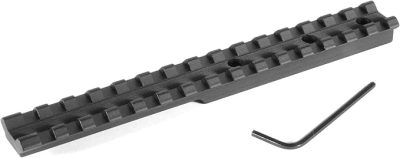
A 0 MOA base keeps the scope perfectly level with the rifle’s bore, making it ideal for short-to-mid-range shooting. Entry-level scopes paired with 0 MOA bases work best for range practice, casual competition, and tactical drills where most shots are taken inside typical distances.
20 MOA Scope Base
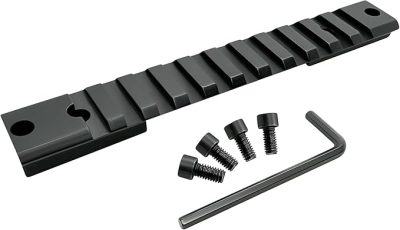
A 20 MOA base is angled slightly downward toward the muzzle, giving the scope more usable elevation adjustment. This setup is beneficial for entry-level shooters looking to extend their effective range and avoid running out of turret adjustment at longer distances.
How to Mount a Riflescope
- Select the right mount and base that match your rifle, rail system, and scope tube diameter. Proper mount height ensures a comfortable cheek weld and consistent eye alignment.
- Set proper eye relief by positioning the scope so you see a full, clear sight picture in your normal shooting position. Correct eye relief improves comfort and prevents scope bite under recoil.
- Level the rifle and reticle to keep the crosshairs perfectly vertical and horizontal. This is essential for accurate tracking when dialing elevation and windage.
- Tighten screws evenly to specification using a torque wrench and a crisscross pattern. Proper torque prevents scope damage and keeps the optic secure under recoil.
- Check security and alignment by confirming all controls move freely and the scope does not shift. Finish with a quick bore sight to ensure the rifle is ready for zeroing.
Entry-Level Tactical Scopes Comparison Shooting Tips and Pointers
- Zero properly and confirm it often to ensure all adjustments and holdovers remain accurate.
- Understand your reticle and use holdovers for faster, more consistent shots instead of dialing every time.
- Use moderate magnification for better stability, clarity, and field of view.
- Focus on shooting fundamentals like body position, breathing, and trigger control.
- Check mounts and turret tracking regularly to maintain consistency and reliability.
FAQs About Entry‑Level Tactical Scopes
- Are entry-level tactical scopes good for long-range shooting?
Yes. Entry-level tactical scopes are capable of basic long-range shooting and training. They are well-suited for learning elevation dialing and wind hold fundamentals.
- Should beginners choose MOA or MRAD scopes?
Both systems work well, but MRAD is often easier for beginners due to simpler math and quicker adjustments.
- How much magnification do I really need?
Most entry-level shooters do well with moderate magnification ranges like 3–9x or 4–16x. Excessive magnification reduces clarity and stability without providing real benefits.
Conclusion
While entry-level scopes hardly include all the advanced features of higher-end models, careful attention to key aspects like clarity, reticle type, and durability ensures a dependable shooting experience.
By understanding your specific needs and matching them to a scope’s strengths, you will make a smart choice that supports both learning and effective performance in the field. Hopefully, you have found this entry-level tactical scopes comparison guide thorough and insightful.
Now that you are a pro already, consider Best Rifle Scopes for Beginners